

Vesuvio DOP and Pompeiano IGP
The cultivation of vines and the production of wine have always characterised the history of the Vesuvian area, starting with the first Greek settlements of Ischia and Cuma.
Between the 1st and 2nd century BC, the Vesuvian area was part of the richest region of the Roman Empire, in this area the largest quantity of the Empire’s wines and some of the finest wines of the time were produced. The archaeological discovery of Villa Augustea in Somma Vesuviana, built around the 2nd century AD, and covered by the eruption of 472 AD, unearthed one of the most important villae rusticae from the Vesuvian area, the largest ancient winemaking site known today.
The discovery in this archaeological site of large wine cells and numerous dolia – also known as amphoras – were used for wine preservation and transport, and are historical evidence of the centrality of the culture and trade of the Vesuvius wine since ancient times.

The production area includes 16 Municipalities of the Province of Naples and, in particular, the entire administrative territory of the Municipalities of Boscotrecase, Trecase and San Sebastiano al Vesuvio, as well as part of the administrative territory of the Municipalities of Ottaviano, San Giuseppe Vesuviano, Terzigno, Boscoreale, Torre Annunziata, Torre del Greco, Herculaneum, Portici, Massa di Somma, Cercola, Pollena Trocchia, Sant’Anastasia and Somma Vesuviana, including a total of 250 hectares of area planted with vines.
The identity of our Wines is given by a unique and inimitable Territory.
The denomination “Vesuvio” DOP (D.p.r. 13/01/1983 – Official Gazette 20/06/1983 – Proposal for Modification published in the Official Gazette 27/12/2016) is used for wines that meet the conditions and requirements established in the product specification. Among the various types and categories, the following are worthy of note:
- Vesuvio DOP (white, red or rosé), a denomination that gives producers the opportunity to combine their business philosophy with the characteristics of the territory
- Vesuvio Lacryma Christi DOP (white, red or rosé), the excellence of the denomination. Only wines made with vines suitable for vinification and in compliance with the strict parameters set by the product specification, can have this denomination, which highlights the volcanic strength of the territory
- Vesuvio DOP (monovarietal), denomination given to wines which are made with local grapes vinified in purity and characterised by a very marked identity that is typical of the organoleptic properties of the grape and of the mineral properties of the soil.
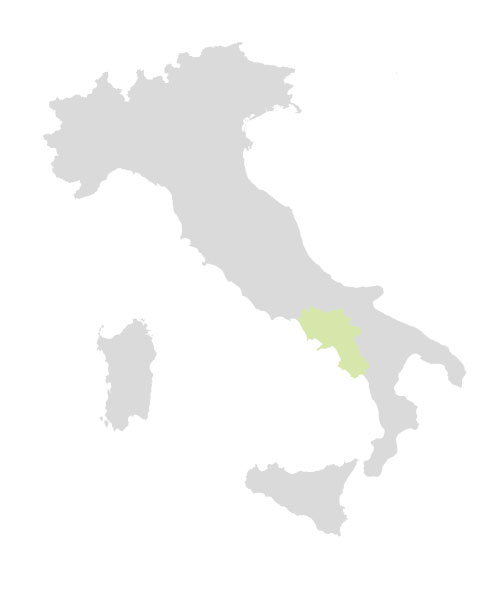
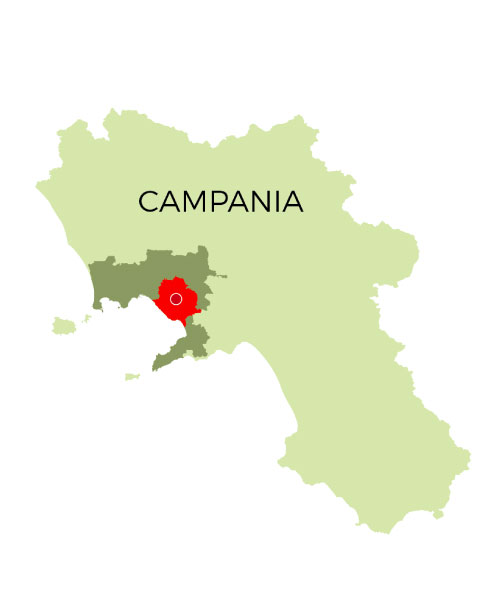

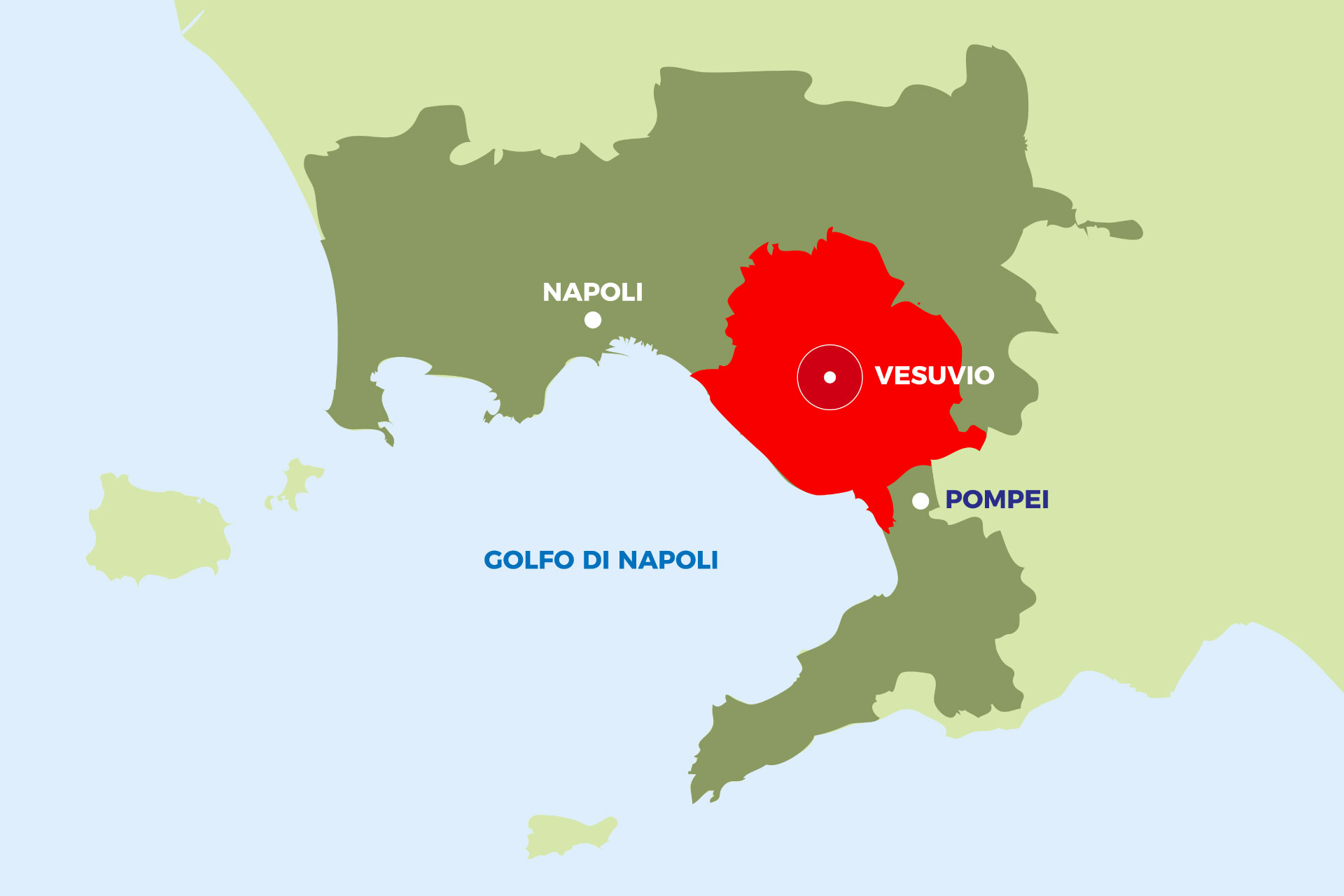

The production area of “Pompeiano” IGP (D.M. 22.11.1995, G.U. 301 of 28.12.1995 – latest changes introduced by D.M. 07.03.2014) includes the entire administrative territory of the municipalities in the province of Naples, except for those falling within the island of Ischia, including a total of 150 hectares of vineyard area.
The enological tradition of the Province of Naples has very ancient origins that can be traced back to the times before the ancient Romans. However, it was during the Roman Empire that the province of Naples began to experience a flourishing development, so much so that its wines also travelled outside the borders of our country. It is said that the ancient Romans, and in particular the Emperors of Rome, really fancied the wines of Campania. Thanks to the favourable climatic conditions and the particular quality of the soil, excellent conditions were created in the region for vine cultivation and wine production. There are many authors of those times who praised the qualities of Neapolitan wine, including Pliny the Elder. The enological splendour of the Province of Naples in those times also allowed the development and improvement of the cultivation and winemaking practices.
The Pompeiano IGP denomination comes from an emblematic place for the history of wine production in the province of Naples: ancient Pompeii. The archaeological remains are a testimony to its origins and great tradition.
The wines are divided into two macro categories:
- IGP Pompeiano, a type of wine that keeps in step with the times without neglecting the expression of the Neapolitan soil
- IGP Pompeiano (monovarietal), which is typical of the vine and nuances of the production area (Campi Flegrei – sea area – up to the slopes of the Vesuvius) of this category.


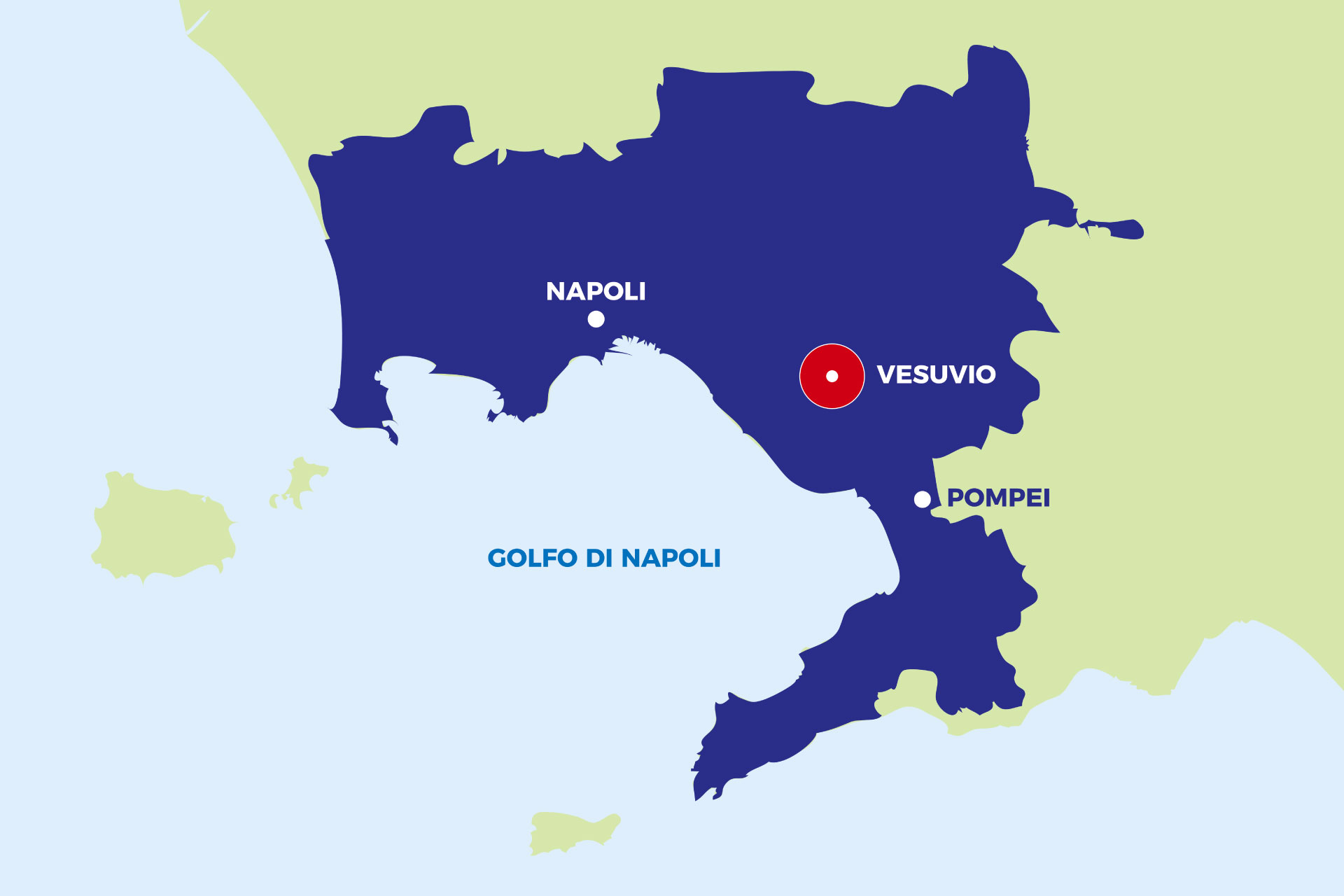
The production area of “Catalanesca del Monte Somma” IGP (Ministerial Decree 13 July 2011, Official Gazette No. 178 of 2 August 2011 – subsequently amended by Ministerial Decree 30 November 2011) includes the entire administrative territories of the municipalities of San Sebastiano al Vesuvio, Massa di Somma, Cercola, Pollena Trocchia, Sant’Anastasia, Somma Vesuviana, Ottaviano, San Giuseppe Vesuviano and Terzigno, all located in the Province of Naples.
This area corresponds to the north-western slope of the Somma-Vesuvius volcanic complex, a territory characterized by volcanic soils, deep ravines (“cupe”), historic terraces and pedoclimatic conditions particularly suited to quality viticulture.
The tradition of Catalanesca dates back to the 16th century. The variety, also known as Catalana or Uva Catalana, is documented in the Vesuvian area as early as the 1500s. Throughout the 19th century, scholars and agronomists described its distinctive qualities: Semmola (1848) highlighted its late ripening and its ability to remain on the vine for extended periods; Froio (1878) listed it among the most noteworthy grape varieties of the Province of Naples; De Giudice (1912) emphasized how northern exposure and dry tramontane winds favor both grape quality and preservation.
An exclusively Campanian grape variety, closely linked to Monte Somma, Catalanesca finds in this area unique environmental conditions: mineral-rich soils, significant temperature variations, constant ventilation and elevations between 200 and 300 meters above sea level, all contributing to balanced vegetative and productive development. More recent enological studies have confirmed its ability to reach high sugar levels while maintaining good total acidity, a key factor in producing well-balanced and age-worthy dry white wines.
The designation “Catalanesca del Monte Somma” IGP identifies a wine deeply rooted in its territory of origin, a direct expression of a historic grape variety that has preserved its identity over time.
The wines are divided into two types:
Catalanesca del Monte Somma IGP Bianco
Produced from at least 85% Catalanesca grapes, it displays a straw-yellow color, an intense bouquet with floral and fruity notes, and a characteristic dry palate. It is a wine of balance and structure, with a minimum alcohol content of 12% vol., capable of fully expressing the mineral component of volcanic soils.
Catalanesca del Monte Somma IGP Passito
Made from dried grapes with a lower yield, it is distinguished by a more or less intense golden-yellow color, intense and typical aromas, and a sweet, aromatic and characteristic taste. It represents the most concentrated and enveloping expression of the variety, with high potential alcohol and notable structure.
In both types, the chemical, physical and organoleptic characteristics are closely linked to the geographical environment of production: the territory’s orography, vineyard exposure and volcanic soil composition all contribute to wines that are balanced, distinctive and clearly identifiable.
The designations are defended and protected by enhancing the work of honest producers.
The Consortium, together with the Control Bodies recognised by the MIPAAF, carries out an important control activity on the protected designation of origin to raise awareness and direct the production chain to respect the rules set out in the product specification, to which the producers themselves, by their own will, have decided to submit.
Agroqualità S.p.A. and the territorially competent ICQRF carry out, through predetermined control plans, annual checks on the compliance with the product specifications. Systematic checks take place during the viticulture, processing, and packaging of the protected designation of origin.
With regards to the control plans, interested parties can directly contact Agroqualità S.p.A. at
agroqualita@agroqualita.it
To ensure tracking and traceability of each bottle, the producers of the Vesuvius have introduced the use of wine labels.
The Consortium provides and distributes wine labels as a service aimed at all those producers who claim the “Vesuvio” DOP designation.